Alopecia areata is a condition that can appear without warning, causing distinct patches of hair loss on the scalp or other parts of the body. It can be deeply unsettling, especially when the patches are in visible locations. At our clinic in Satellite, Ahmedabad, we see patients with alopecia areata regularly and understand both the physical and emotional weight the condition carries. The encouraging news is that the follicles in affected patches are usually still alive and capable of regrowth with the right treatment.
What Causes Alopecia Areata
Alopecia areata is classified as an autoimmune condition - the body's immune system, which normally protects against infection and disease, mistakenly recognises hair follicles as a foreign threat and attacks them. This immune attack causes the follicles to stop producing hair, resulting in the characteristic smooth, round patches of baldness.
The exact reason the immune system turns on hair follicles in some people and not others is not fully understood. Genetics play a role - people with a family history of alopecia areata, or of other autoimmune conditions such as thyroid disease or vitiligo, have a higher risk. Emotional stress or a physical illness may trigger an episode in genetically susceptible individuals, though stress alone does not cause alopecia areata.
Importantly, the follicles themselves are not destroyed in most cases of alopecia areata. They are suppressed by the immune attack and remain dormant below the skin surface, which is why spontaneous regrowth can occur and why treatments that calm the immune response or stimulate the follicles can be effective.
Signs and Symptoms
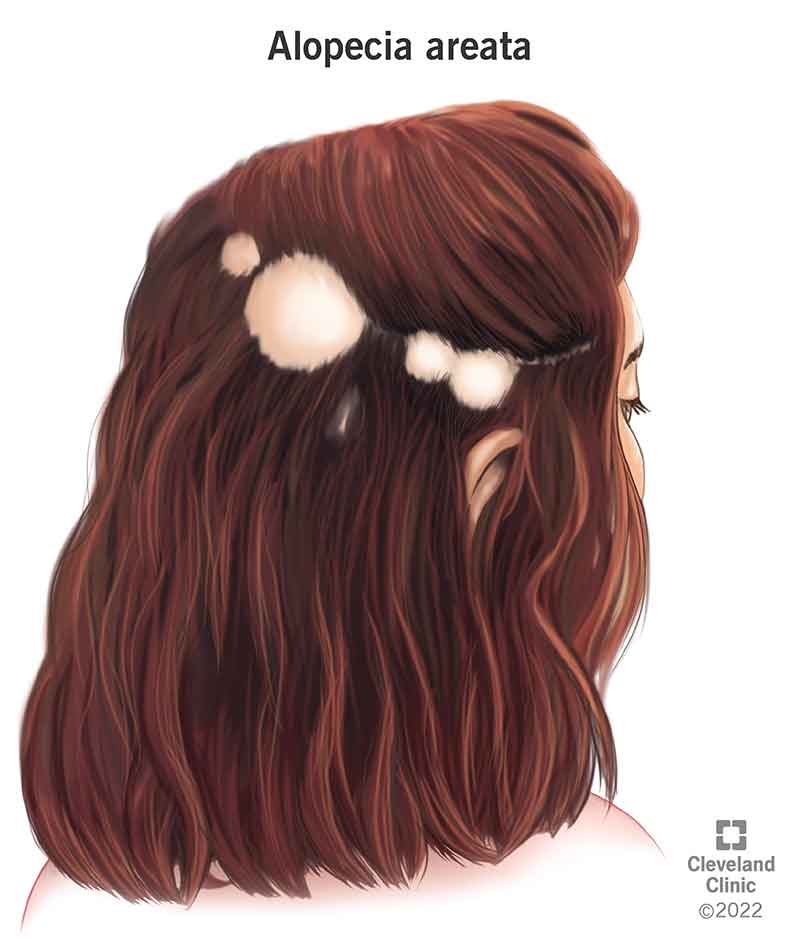
Alopecia areata typically presents as one or more oval or circular patches of smooth, completely bald skin on the scalp. The surrounding hair may feel normal, or there may be short, broken hairs (called exclamation mark hairs) at the edges of the patch, which are a characteristic feature. The skin within the patch is usually normal in colour and texture - there is no scarring, scaling, or redness in the typical form.
In some cases, the condition progresses to affect the entire scalp (alopecia totalis) or the whole body including eyebrows, eyelashes, and body hair (alopecia universalis). Nails may show fine pitting or ridging in some people with alopecia areata.

Our Approach at Lavish Aesthetique Clinic
At Lavish Aesthetique Clinic in Satellite, Ahmedabad, our doctors assess the extent and pattern of your alopecia areata and look for any associated conditions such as thyroid imbalance before planning treatment. We use a combination of approaches to address both the immune component and the follicle stimulation side.
Platelet-rich plasma (PRP) therapy uses concentrated growth factors from your own blood to nourish and reactivate dormant follicles. GFC (growth factor concentrate) is a refined form of PRP with even higher concentrations of specific growth factors beneficial for follicle recovery. Topical minoxidil is often included to extend follicle stimulation between sessions, and for resistant or extensive disease our doctors can advise on systemic options including newer targeted therapies. Our doctors monitor your response and adjust the treatment plan over time to optimise regrowth at our clinic in Satellite, Ahmedabad.
Related Treatments
Frequently Asked Questions
Q: Will my hair grow back on its own without treatment? A: Alopecia areata can resolve spontaneously, particularly when patches are small and the condition has been present for a short time. However, there is no way to predict whether or when this will happen. Treatment significantly improves the chances of faster regrowth and reduces the risk of the patches enlarging or multiplying.
Q: Is alopecia areata contagious? A: No. Alopecia areata is an autoimmune condition and cannot be passed from one person to another through contact. It is not caused by any infection, hygiene issue, or external factor.
Q: Can alopecia areata be permanently cured? A: There is currently no permanent cure for alopecia areata. However, many people achieve excellent and long-lasting regrowth with treatment, and some go into extended remission. The condition can recur, particularly after triggers like stress. Our doctors provide ongoing support and management at our clinic in Satellite, Ahmedabad to help maintain results.
To find out which treatment is right for you, book a consultation at our clinic in Satellite, Ahmedabad.