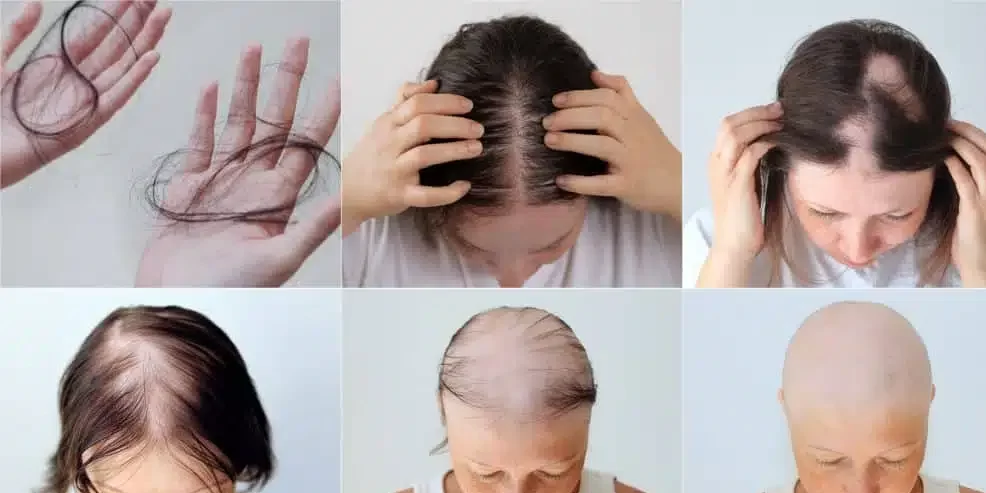
Alopecia areata is one of the more unpredictable hair conditions a person can face. Patches of hair can appear suddenly, anywhere on the scalp, and the extent to which they grow back - and whether new patches appear - varies significantly between individuals. At our clinic in Satellite, Ahmedabad, we treat patients with alopecia areata with a carefully structured approach that gives follicles the best possible environment to recover, while also addressing the autoimmune activity driving the condition.
Understanding the Treatment Challenge
Treating alopecia areata is unique because the condition's underlying driver is immune in nature. The body's own immune cells attack the hair follicles, causing them to stop producing hair. Crucially, in most cases the follicles are not permanently destroyed - they are suppressed. This is what makes treatment possible and gives grounds for optimism in many cases.
However, because alopecia areata is autoimmune, treatments that simply stimulate the follicle without addressing the immune attack often have limited long-term success. The most effective treatment strategies combine approaches that calm the localised immune response with those that directly nourish and reactivate the follicles.
The condition can also be emotionally exhausting because of its unpredictability. Our doctors in Satellite, Ahmedabad take time to explain what to expect, set realistic goals, and support patients through the treatment journey with regular monitoring and plan adjustments.
Treatment Options at Lavish Aesthetique Clinic
We offer several treatment options for alopecia areata, and the right combination depends on the number of patches, their size, how long they have been present, and how the condition has behaved over time.
PRP (platelet-rich plasma) therapy involves drawing a small amount of your blood, concentrating the growth factors using a centrifuge, and injecting the resulting plasma into the scalp. These growth factors directly nourish follicles, stimulate cellular repair, and create a healthier environment for hair to regrow. Multiple studies have shown positive results for alopecia areata with PRP.
GFC (growth factor concentrate) is a more refined form of this approach. It delivers higher concentrations of specific hair-beneficial growth factors in a purer preparation. For patients whose alopecia areata has not responded well to standard PRP, GFC can offer additional benefit.
Topical minoxidil is often added to support follicle activity between regenerative sessions, and for resistant or more extensive disease, our doctors can advise on systemic options including newer targeted therapies that require specialist supervision.

Our Approach at Lavish Aesthetique Clinic
At Lavish Aesthetique Clinic in Satellite, Ahmedabad, every patient with alopecia areata receives a full scalp and systemic assessment first. We check for associated autoimmune or thyroid conditions that commonly occur alongside alopecia areata and that may influence treatment response. Trichoscopy gives us a detailed picture of follicle status within each patch.
We then build a treatment plan that combines appropriate medical treatment for the immune component with regenerative therapy to boost follicle recovery. Progress is monitored at each visit, and the plan is adapted based on how your scalp responds. We understand that alopecia areata can be discouraging, and we are committed to being thorough, honest, and supportive throughout your treatment at our clinic in Satellite, Ahmedabad.
Related Treatments
Frequently Asked Questions
Q: How effective is PRP for alopecia areata? A: Clinical evidence supports PRP as a beneficial treatment for alopecia areata, particularly for localised patchy disease. Many patients see improved hair density and new growth in treated areas after three to four sessions. Results are best when PRP is combined with other treatments rather than used alone, which is the approach our doctors take at our clinic in Satellite, Ahmedabad.
Q: How long does alopecia areata treatment take before hair grows back? A: Most patients begin to see fine hair regrowth - often initially white or colourless - in treated patches within eight to twelve weeks of starting treatment. Full regrowth of normal-coloured hair can take four to six months. The timeline varies depending on the size of the patches and how long they have been present.
Q: What happens if my alopecia areata spreads despite treatment? A: In cases where alopecia areata is spreading despite localised treatment, we reassess the treatment plan. This may involve escalating to more aggressive medical management or considering referral to an immunologist. Our doctors stay closely involved in monitoring your progress and will not simply continue a plan that is not working.
To find out which treatment is right for you, book a consultation at our clinic in Satellite, Ahmedabad.