Hair loss is one of the most emotionally impactful conditions we treat at our clinic in Satellite, Ahmedabad. Whether it develops gradually or seemingly overnight, losing hair affects how people see themselves and interact with the world around them. Many forms of hair loss are treatable, especially when addressed early and with an accurate diagnosis.
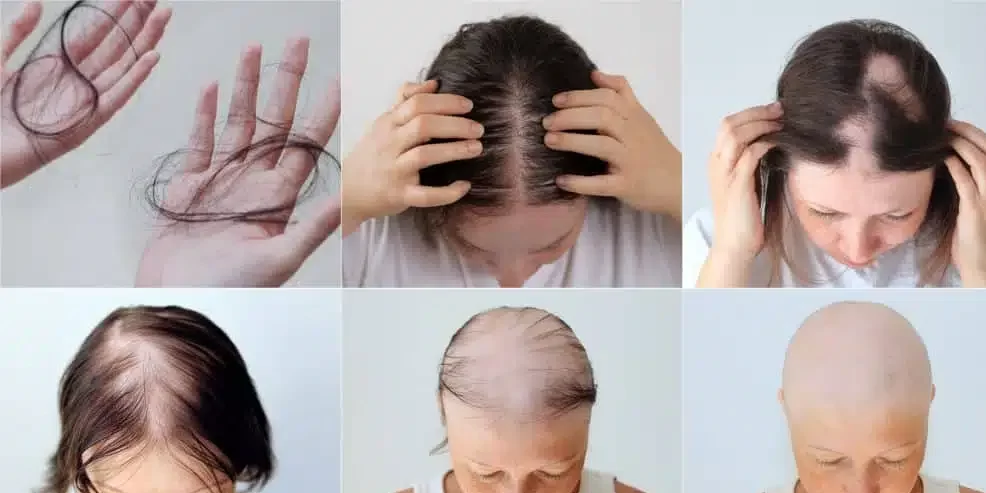
What Causes Alopecia
Alopecia is an umbrella term that covers many different forms of hair loss, each with a distinct cause. The most common form is androgenetic alopecia (pattern hair loss), which is driven by genetic sensitivity to dihydrotestosterone (DHT) - a hormone that miniaturises hair follicles over time. In men, this produces the classic receding hairline and crown thinning. In women, it tends to cause diffuse thinning across the top of the scalp with the hairline generally preserved.
Telogen effluvium is another very common cause of hair loss, involving the sudden shedding of hair weeks to months after a triggering event. Common triggers include significant physical stress (illness, surgery, childbirth), rapid weight loss, nutritional deficiencies (particularly iron, vitamin D, and B12), thyroid imbalances, and emotional stress. This type of hair loss is usually temporary and recoverable with the right support.
Alopecia areata is an autoimmune condition that causes patchy hair loss on the scalp or body. Scarring alopecias, caused by inflammation that permanently damages follicles, are less common but require prompt attention. Understanding which type is present is essential to choosing the right treatment.
Signs and Symptoms
Hair loss presents very differently depending on its type. Gradual overall thinning of the scalp, particularly at the crown, is the hallmark of pattern hair loss. Sudden shedding of large amounts of hair across the scalp, often noticed in the shower or on the pillow, points toward telogen effluvium. Distinct, smooth, circular bald patches suggest alopecia areata. Itching, scaling, or burning of the scalp alongside hair loss may indicate an inflammatory or scalp-health issue that requires medical attention.
Hair loss severity is often assessed using standardised scales, and trichoscopy (a detailed scalp examination tool) is valuable in distinguishing between types of hair loss before treatment is begun.

Our Approach at Lavish Aesthetique Clinic
For the best hair loss treatment in Ahmedabad, our doctors begin with a detailed consultation and, where relevant, blood tests to evaluate hormonal, nutritional, and thyroid status. We use trichoscopy to assess the scalp and follicle health before building a treatment plan.
Our regenerative treatments include platelet-rich plasma (PRP) therapy, where growth factors from your own blood are injected into the scalp to stimulate dormant follicles and prolong the growth phase of existing hair. GFC (growth factor concentrate) therapy is a more advanced form offering higher concentrations of specific hair growth factors. PRF (platelet-rich fibrin) is another regenerative option used at our clinic in Satellite, Ahmedabad. These are combined with appropriate medical management and hairfall-specific treatments to give your hair the best possible foundation for recovery.
Related Treatments
Frequently Asked Questions
Q: How do I know which type of alopecia I have? A: A doctor must assess your hair loss pattern, history, and scalp condition to determine the type. Blood tests help identify nutritional or hormonal causes. Trichoscopy allows a magnified view of the scalp and follicles, revealing characteristic patterns associated with different types of alopecia. Self-diagnosis is unreliable, and the wrong treatment can be ineffective or even worsen the situation.
Q: Can lost hair grow back completely? A: Whether and how much hair can regrow depends on the type of alopecia and how long it has been present. Telogen effluvium is usually fully reversible. Pattern hair loss can be significantly slowed and modest regrowth achieved with treatment, especially if started early. Alopecia areata may respond well to regenerative treatments. Scarring alopecias have more limited regrowth potential since the follicles are damaged.
Q: How long before I see results from hair loss treatment? A: Most patients begin to notice reduced shedding within six to eight weeks of beginning treatment, and visible regrowth tends to appear after three to four months. A full course of PRP or GFC therapy typically involves three to four sessions. Patience is important - hair growth is slow by nature, and results build over several months.
To find out which treatment is right for you, book a consultation at our clinic in Satellite, Ahmedabad.